MONGOLIA & GOBI DESERT ITINERARY:
SPECIAL NOTE: Mongolia is an interesting and unusual journey to
a remote
destination, and is undeveloped by Western standards. The accommodations
maybe rustic or spartan, but are the best available. The food is simple but tasty –the Mongolian diet revolves around meat, cheese and noodles with little in the
way of vegetables. The weather is unpredictable and can vary greatly from one day
to the next. The traditional nomadic lifestyle and culture are pervasive and may
effect scheduling, and the order of events and inclusions may change.
SPECIAL EVENT: The Naadam Festival (July Departure): Our July departure
date was specifically selected to include the century old Naadam Festival, the
biggest festival of the year for Mongolians. The word Naadam means game or
competition in Mongolian. Horse racing, archery, and wrestling competitions take
place at the main festival in Ulaan Baatar, and at smaller venues around the country.
DAYS 1 & 2, Saturday & Sunday - Depart for Beijing, CHINA
Depart the USA on Thursday and arrive in Beijing on Friday. You are greeted at the
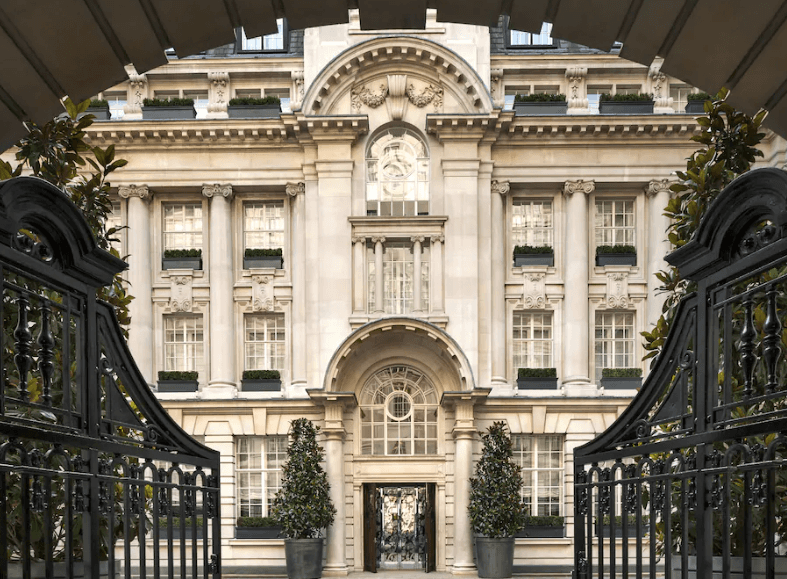
airport and transferred to your luxury hotel, the St. Regis. Located on the grounds
of the historic Beijing International Club
in the center of the city’s Diplomatic
District, the St. Regis is the pinnacle of luxurious accommodations in China.
Chinese history permeated Beijing with sites of cultural and historical importance,
many of them — the Great Wall, the former Imperial Palace and the Summer Palace
— designated as UNESCO-endorsed World Cultural Heritage
sites.
You will have the remainder of the day to rest from your long flight or to begin
exploring this wondrous city on your own.
Tonight there will be a cocktail and dinner party to meet your Travcoa Travel Director
and your fellow travelers and learn abou the exciting adventures ahead.
St. Regis Hotel
DAY 3, Monday - Beijing
This morning travel outside urban Beijing to the Great Wall, known to the Chinese
as the “Long Wall of Ten Thousand Li” (5,000 km.). It stretches from the
Shanhaiguan Pass on the East Coast to the Jiayuguan Pass in the Gobi Desert.
Originally built in small sections by individual feudal states during the 5th-century
B.C., the Great Wall was connected at the end of the 3rd
century B.C. on the
orders of the Emperor Qin Shi Huang when he unified all of China. The Great
Wall was built as a defense against invaders from the north, and became a conduit
of communication, with news and orders carried by the armies that traveled it.
Today, it is the only man-made structure visible from space. The scenery is
breathtaking, and you will have leisure time for a walk on the Great Wall and
photograph it.
Continue to the extraordinary Ming Tombs. Known in Chinese as Shi San Ling, the
Thirteen Tombs,
as thirteen of the sixteen Ming emperors are buried there. Enter by
the Sacred Way, the original entrance to the Ming Tombs, where no commoner was
allowed upon pain of death. St. Regis Hotel
DAY 4, Tuesday - Ulaan Baatar, MONGOLIA -Today fly from Beijing to
Ulaan Baatar.
Mongolia stirs up visions of the warlord Chingis Khan (often mistakenly called
Genghis Khan in the USA), camels crossing the Gobi Desert and wild horses
galloping across the steppes. Even today, it seems like the end of the earth –
and outside Ulaan Baatar you might wonder if you’re not in another century.
The del is the Mongols traditional garment, worn on both workdays and special
days. It is a long, loose gown cut in one piece with the sleeves; it has a high
collar, widely overlaps at the front and is girdled with a sash. Each ethnic group
living in Mongolia has its own del distinguished by cut, color and trimming. The
distinctions are rarely noticed by outsiders, yet for the Mongols they are obvious.
Even in the somewhat modern Ulaan Baatar, you can see residents proudly
wearing their native dels.
As an introduction to the Mongolian history and culture, today you will visit the
Museum of National History of Mongolia. Housing more than 40,000 archaeological,
historical and ethnographic objects, the 10 permanent galleries present Mongolian
history and culture from the dawn of humans to the present. The rare and priceless
objects displayed include items from the Hunnu period (3rd century B.C. –1st
century
A.D.), artifacts, traditional costumes, a ger and articles from nomadic life.
Ulaan Baatar Hotel / Chingis Khan Hotel
DAY 5, Wednesday - Ulaan Baatar and the Gorkhi-Terelj National Park
This morning visit the largest and most revered monastery in Mongolia, the
sacred
Gandan Monastery. Most of the temples and monasteries were destroyed during
the Stalinist purges of the late 1930’s. The Gandan, or Gandantegchinlen, monastery
survived because it was kept as a showcase to impress foreigners. Translated as
“the great place of complete joy,” Gandan
Monastery has several glorious temples
adorned with gold and jewels. There are about 150 monks in residence today. Tour
inside the Megjid Janraisig Temple – built in 1911 to celebrate the end
of Manchu
domination, and, it is said, to heal the Bogd Gegen (Khaan) from blindness.
This afternoon drive approximately 70 miles north into the relatively
new Gorkhi-
Terelj National Park. Founded in 1993, it covers a part of the Khentii-Mountains
most
well known for its spectacular rock formations, and a scenic alpine landscape.
We take time to explore and appreciate the areas larch and pine forests,
sparkling mountain rivers, and very diverse flora and fauna – including endangered
species of moose, brown bear and weasel, as well as over 250 species of birds.
See two of the park’s many rock formations include the renowned Turtle Rock
(Mongolian: Melkhi Khad) and the Old Man Reading a Book – aptly name for what
they resemble. Many Americans were introduced to Gorkhi-Terelj National Park
when the reality television program ‘The Amazing Race’ visited the park in 2006.
The Central Asian nomads gers, (or yurts) are circular tents, made of a wooden
framework covered by large pieces of felt. A decorative cloth covering may be
laid over the felt. The ropes that go around the ger, called bus (belts),
are usually made of braided horse mane and tail hair. The wooden framework
consists of collapsible walls, topped by poles radiating from a central smoke
hole ring. The nomads developed these unique dwellings to adapt to the difficult
conditions of their daily life and to be easily moved. Easily assembled and
disassembled, a ger’s components and contents can be loaded on camels or on a
yak
cart (a truck is more commonly used today). See how these simplistic yet
purposeful nomadic homes are constructed during our ‘hands
on’ building
demonstration.
Your accommodations for tonight are in the true Mongolian tradition –
comfortable ger
tents. Watching the late sunset here will encourage you to dream
of peace and trials of the nomadic lifestyle. Gorkhi-Terelj Ger Camp
DAY 6, Thursday - Ulaan Baatar
This morning you will have the unique opportunity to visit a local family in their ger
home, and to learn about the lifestyle of nomads. By tradition the ger always faces
south, with the eastern side being the women's and the western side being the
men's. This applies to sitting arrangements and arrangements of household goods.
When visiting a family in their ger, traditionally you are offered airag (the Mongolian
national drink of fermented mare’s milk), cheese and a sniff of a snuff bottle. Sample
the traditional offerings, but be sure to follow the protocol as explained by your local
guide.
Horse-breeding is the main source of income for many Mongolians, and you will have
the opportunity to visit a horse breeder’s camp and ride a horse atop a unique
Mongolian wooden saddle.
En route to the Ulaan Baatar hotel, visit the Bogdo Khaan Winter Palace Museum.
Built between 1893 and 1903, the Bogdo Khaan Winter Palace is the home of the
last Mongolian King, Javzun Dambia Khutagt VII. The Palace contains a number of
Buddhist artworks and the private collection of Bogdo Khaan, which is comprised
of gifts from international heads of state. Many of the sculptures displayed here
were made by the premier Mongolian, Tibetan and Chinese masters of the 18th
and 19th centuries. Ulaan Baatar Hotel / Chingis Khan Hotel
DAY 7, Friday - Ulaan Baatar – Naadam Festival
The Naadam Festival, or eriyn gurvan naadam, is the largest festival of the year for
Mongolians. It runs for three days throughout the country highlighting the nation’s
greatest athletes in Mongolia's most popular sports, horse racing, archery, and
wrestling. Women participate in all sports except for wrestling. The word Naadam
translates as “game” or “competition.” Traditionally, competitions take place on the
first two days and revelry is reserved for the third.
The festivities kick off with a colorful parade of athletes, monks and soldiers marching
in perfect unity, musicians performing powerful military
tunes and Mongolians
dressed in Chingis style warrior uniforms. See the Opening Ceremonies and some
of the wrestling and archery competition.
This evening you will attend a special and colorful Naadam concert and reception. A
highlight of the performance is the traditional dancing, unique Mongolian instruments,
and the hauntingly beautiful artistry of hoomi (throat) singing. Hoomi singing opens
a small window on an incredibly complex and rich heritage and has often been
described as double singing because it sounds like several notes being produced
simultaneously. Perfecting this eerily beautiful acoustic singing requires years of
training and is produced by the precise control of the larnx, mouth, and abdominal
muscles. Ulaan Baatar Hotel / Chingis Khan Hotel
DAY 8, Saturday - Gobi Desert
Before departing Ulaan Baatar, and in preparation for your visit to the Gobi Desert,
enjoy a special visit to the Natural History Museum. Here you will view some of the
most significant paleontological finds in human history – two immense and complete
dinosaur skeletons, the giant flesh eating Tarbosaurus and its first cousin, the little
duckbilled plant-eating Saurolophus – and several dinosaur eggs unearthed in the Gobi Desert. In addition there are exhibits about Mongolia's geography, flora and
fauna.
Next, board a flight to Omni Gobi and absorb the beauty of the remote Gobi Desert.
The “Gobi” is a vast zone of desert and desert steppe covering almost 30 percent
of the Mongolian territory. Many people imagined the Gobi to be a place of
unbearable heat and lifeless sand
dunes, and although known to be one of the
harshest environments on earth, the Gobi has temperatures that run the extremes
with the seasons.
The Great Mongolian Gobi (the western part is located inside
China)
has high mountains, springs, forests, sands, steppe lands and a rich animal
kingdom. Inhabited since ancient times, the Great
Gobi Reservation, was established
in 1975, and was designated by the United Nations as the fourth largest Biosphere
Reserve in the world in 1991.
Today visit the unexpectedly green Yol Valley National Park. The Yol Valley is in a
narrow canyon of the river flowing through the Zuun Saikan Mountains. A protected
area since 1965, this gorge has rock walls as high as 60 feet. Enjoy an easy hike (or
horseback ride) through the valley, spotting the flower, fauna and possible waterfalls
along the way. The 2
mile path ends with views of the “Gobi Glacier.”
Your accommodations in the Gobi Desert are also in a Mongolian ger. The gers of the
Gobi are especially known for their beautifully carved and decorated doors.
Tuvshin or
Three Camel Lodge Ger Camp
DAY 9, Sunday - Gobi Desert & Flaming Cliffs
The Flaming Cliffs or Bayan Zagh, is also known as the “cemetery of dinosaurs.” Here
Roy Chapman Andrews, a famous American paleontologist, and his expedition
discovered the first nest of dinosaur eggs the world had ever seen. Paleontologists
from all over the world continue to discover unique findings in this reddish-colored
sand canyon and have unearthed objects from the Stone Age. Archeological finds
of the Paleolithic era have been found here, as well as a complete dinosaur skeletons,
eggs, and hatchlings. Our Mongolian guide will show you areas where many dinosaur
relics were discovered, and where you can still find dinosaur fossils today.
Very different from their relatives, the North American dinosaurs, these brilliantly
preserved fossils from Central Asia include adults, juveniles, babies, embryos and
nests of the first fossil eggs of meat-eating dinosaurs found anywhere in the world.
You’ll not forget the sight when you gaze upon the Flaming Cliffs, where the stones
seem to catch fire under the brilliant sun.
You will also stop at the Moltsog Els (sand dunes), for yet another view of the Gobi’s
unexpectedly diverse terrain. Visit a local camel breeder for a camel riding session
and to further explore the life of nomads.
In the countryside of Mongolia, people still live much as they have for centuries. Their
lifestyle is well suited to the environment and has been refined through time. People
in the countryside live simply, but enjoy a high level of literacy and are more
sophisticated
than what the term nomads may conjure up to the Western mind.
Part of Mongolia’s
charm is in understanding the nomadic lifestyle and the ancient
customs and traditions
of its people. Mongolians are true nomadic herders and each
herdsman strives for a healthy balance in his livestock and his life.
Relax with dinner this evening, enjoying some local entertainment – perhaps
traditional Mongolian hoomi (throat) singers, musicians or dancers.
Tuvshin or Three Camel Lodge Ger Camp
DAY 10, Monday - Ulaan Baatar
Today you leave the serene vistas of the Gobi, and return by air to Ulaan Baatar.
In Ulaan Baatar see the War Memorial at Zaisan Hill, a towering landmark that lies at
the front of the city. The Zaisan Memorial is dedicated to the Victory Day of WWII,
and its design is a good example of past Soviet influence. It offers some of the best
views of Ulaan Baatar and surrounding nature.
You’ll also visit an orphanage center, to see the care given to orphans and also to
those rescued from life on the street. Here you’ll get an insight to the modern
problems that have developed in this ancient land and culture.
Tonight enjoy a special dinner to bid farewell to Mongolia.Ulaan Baatar Hotel /
Chingis Khan Hotel
DAY 11, Tuesday - Ulaan Baatar & Beijing, CHINA
This morning return to Beijing. Enjoy the remainder of the day at leisure do some
shopping, explore the area on your own, or just relax at your luxuriously
appointed hotel.
Tonight there will be a farewell dinner party with your fellow travelers and
your Travel Director to say good-bye to this thrilling journey.
St. Regis Hotel
DAY 12, Wednesday - Depart for Home
This morning you will be taken to the airport and depart for home or on to your
next destination.
NOTE: The Daily Itinerary above is subject to change dependent upon local
conditions and/or operational changes or improvements. The specific times and order
of inclusions within each destination may also be altered to best
accommodate
unscheduled closure, special events, weather, traffic, etc. Please contact your
Vacation Planner
before scheduling any coinciding appointments. You will
receive an up-dated, itinerary approximately 30 days prior to your journey’s
scheduled departure date.
Back to
TRAVCOA ASIA - Menu
Page